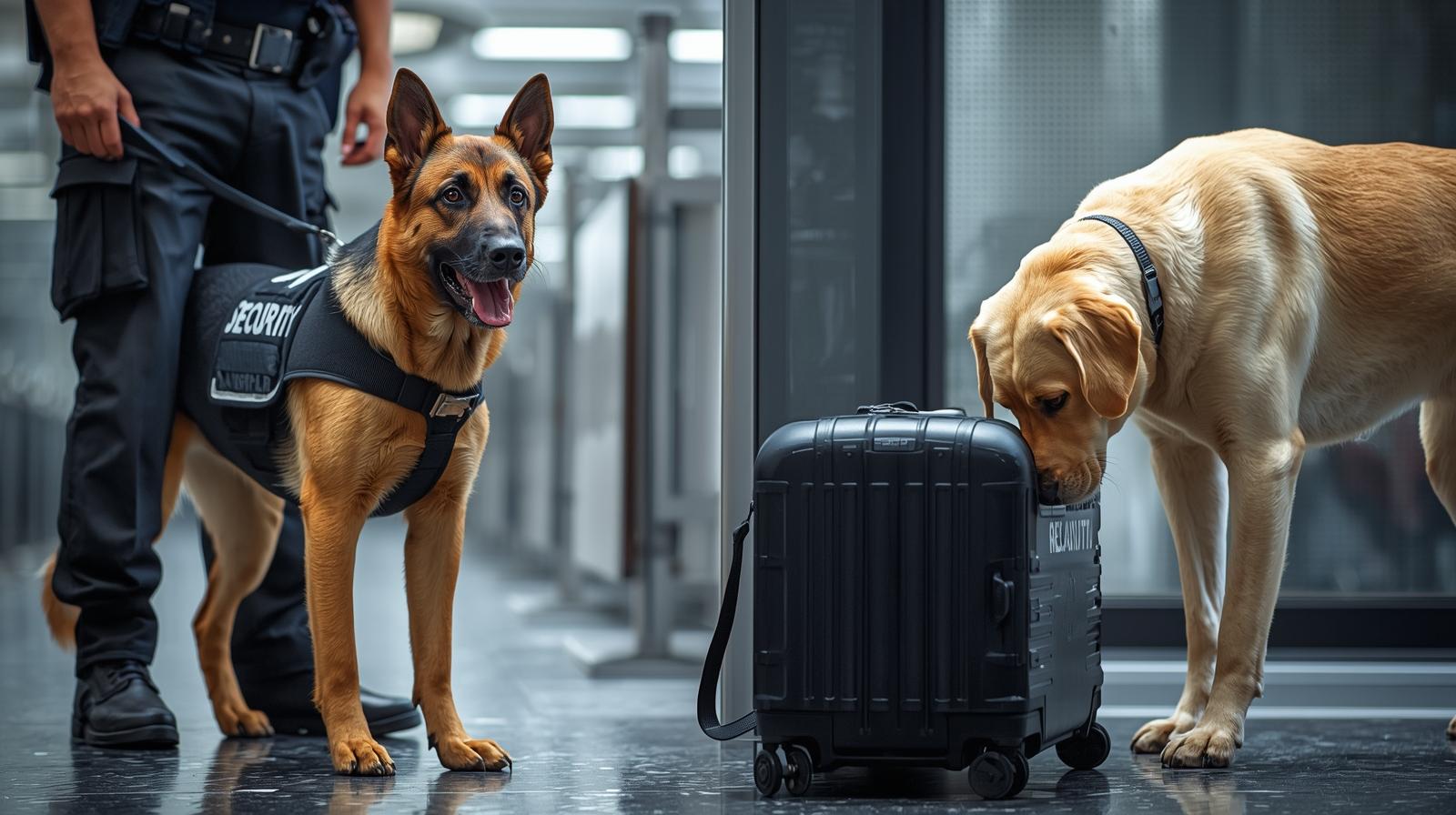
Dogs play an important role in modern security. Their instincts, intelligence and loyalty make them invaluable partners in protecting people, property and events.
However, not all working dogs do the same job. Two of the most common types used in security are Security (Patrol) Dogs and Detection (Sniffer) Dogs and while their skills may overlap, their roles and training are quite different.
Understanding the difference between them helps clients choose the right service for their needs and gives a better appreciation of just how capable these animals are.
Security Dogs (Patrol Dogs)
Security dogs, often referred to as patrol dogs, are trained primarily to protect and deter. They work alongside qualified handlers to provide a visible and highly effective security presence at sites such as business parks, construction sites, warehouses, events and private properties.
Their main role is to detect and deter intruders through their heightened senses and natural guarding instincts. They are trained to:
-
Patrol designated areas and alert handlers to suspicious activity.
-
Locate hidden individuals.
-
Protect their handler and property if a threat is identified.
-
Respond to commands calmly and under control.
A well-trained patrol dog does not act aggressively without reason - they are controlled, disciplined and operate under the handler’s direction. The sight, sound and presence of a trained security dog alone can often prevent crime before it happens.
Detection Dogs (Sniffer Dogs)
Detection dogs, sometimes called sniffer dogs, use their incredible sense of smell to locate specific scents rather than people.
These dogs are trained to identify and indicate the presence of particular substances, depending on their area of work. Common examples include:
-
Explosive detection dogs for airports, events or public venues.
-
Drug detection dogs used by law enforcement or private organisations.
-
Cash or weapon detection dogs for specialist operations.
Detection dogs are taught to locate these scents passively - meaning they will sit or signal to their handler when they detect an odour, without disturbing the item or person involved. This approach is discreet, accurate and essential for maintaining safety and compliance at events or high-security locations.
Key Differences Between the Two
Although both types of dogs undergo extensive training, their focus and purpose differ:
|
Security Dogs
|
Detection Dogs
|
|
Trained to deter, protect, and patrol.
|
Trained to identify specific odours or substances.
|
|
Used for guarding sites, events, and people.
|
Used for searches and screening in public or private settings.
|
|
Respond to human behaviour or threats.
|
Respond to specific scents such as drugs, explosives, or currency.
|
|
Work to provide visible security presence.
|
Work discreetly as part of wider safety operations.
|
Both play vital roles in keeping environments safe, often working side by side as part of larger security operations.
Training and Temperament
The effectiveness of both types of dogs comes down to specialist training and strong handler relationships. Dogs used in security and detection work are carefully selected for their temperament, obedience, and motivation to work.
Training focuses on control, consistency and welfare, ensuring that every dog performs its role safely and confidently. Both security and detection dogs are assessed regularly to maintain professional standards and operational readiness.
Why the Difference Matters
Choosing the right type of dog for the job depends on the environment and objective.
-
A Security Dog Team is ideal for protecting a site, deterring trespassers or assisting with crowd control.
-
A Detection Dog Team is best for screening venues, searching vehicles, or supporting investigations.
Understanding this distinction ensures the most effective and appropriate use of these highly skilled animals.
Find Out More
For advice on dog handling services, security dogs, or detection dog operations, you can contact Fortis for professional guidance.
Call 0208 088 3031 or email admin@fortisservicesltd.co.uk for further information.